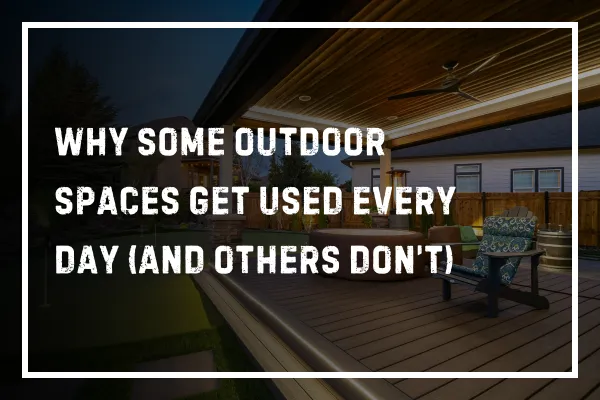
Why Some Outdoor Spaces Get Used Every Day (And Others Don’t)
Most outdoor spaces fail for the same reason expensive home gyms fail. The intention was good. The execution was disconnected from reality.
Homeowners spend thousands building patios, decks, pergolas, and seating areas that look beautiful for six weeks a year and sit empty the rest of the time. The issue is usually not the budget. It is that the space was designed around appearance instead of behavior.
The outdoor spaces people actually use every day tend to follow the same patterns. They feel comfortable, convenient, and connected to daily life. That is what separates a functional outdoor space from an expensive backyard decoration.
1. Easy Access Changes Behavior
The outdoor spaces people use most are usually the easiest to reach. A patio directly off the kitchen or living room naturally becomes part of daily routines. People step outside with coffee in the morning, eat dinner outdoors more often, or spend a few minutes outside after work because the transition feels effortless.
Spaces tucked far away from the house often become occasional-use zones. They may look impressive, but convenience almost always beats novelty over time. Good outdoor design reduces friction. The easier a space is to access, the more likely people are to actually use it.
2. Weather Protection Extends the Life of the Space
A completely exposed outdoor space only works when conditions are perfect. In the Pacific Northwest, that is a risky strategy.
Covered patios, pergolas, overhead structures, and thoughtful shade placement dramatically increase usability. People naturally gather in spaces that feel protected from direct sun, wind, or rain. It is the same reason restaurants prioritize covered patio seating whenever possible. Comfort keeps people outside longer.
The best outdoor spaces are not built just for sunny Saturdays in July. They are designed to stay functional through changing conditions.
3. Comfort Beats Aesthetics Almost Every Time
A surprising number of outdoor spaces are optimized for social media instead of actual human comfort. The furniture looks sleek, the layout photographs well, and nobody wants to sit there for more than twenty minutes.
Comfortable seating, durable materials, and layouts that encourage conversation consistently outperform trend-driven setups. The same logic applies to material selection. Outdoor spaces built with low-maintenance, durable products stay enjoyable because homeowners spend less time maintaining them and more time using them.
People return to spaces that feel easy. They avoid spaces that feel like work.
4. Lighting Determines Whether the Space Dies at Sunset
One floodlight attached to the side of the house is not a lighting strategy. It is a security feature pretending to be ambiance.
Outdoor lighting affects behavior more than most homeowners realize. Warm overhead lighting, pathway lights, and subtle accent lighting create an environment people naturally want to stay in longer. Harsh lighting does the opposite. It makes spaces feel sterile and uncomfortable.
Restaurants, hotels, and hospitality brands understand this extremely well. Atmosphere matters. Outdoor spaces that feel inviting at night instantly become more functional and more valuable.
5. The Best Outdoor Spaces Feel Lived In
Some homeowners accidentally create outdoor spaces that feel too perfect to use. Everything has to stay spotless. Furniture cannot move. Kids and pets become stress factors instead of part of the experience.
The outdoor spaces people use constantly are usually the ones designed around flexibility. They can handle dinners, muddy shoes, dogs, conversations, and imperfect weather without feeling fragile. That is what makes a space feel natural instead of staged.
The goal is not creating a showroom. The goal is creating a space people genuinely want to spend time in.
The Bottom Line
The outdoor spaces that get used every day are rarely the most extravagant. They are the ones designed around comfort, convenience, durability, and real human behavior.
Good outdoor spaces do not just improve curb appeal. They improve how a home functions. When a space feels easy to use, people naturally return to it over and over again. That is what great outdoor design actually accomplishes.
