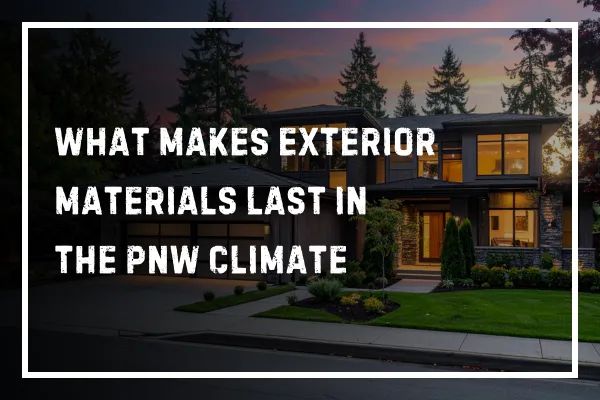
What Makes Exterior Materials Last in the PNW Climate
The Pacific Northwest is one of the toughest environments for a home’s exterior. Long rainy seasons, cool temperatures, and persistent moisture put constant pressure on siding, trim, paint, and outdoor structures. Homes here rarely fail because of dramatic weather events. More often, materials break down slowly as moisture finds its way into places it does not belong.
Homes that hold up well in this climate are not relying on luck. They are built and maintained with the region’s conditions in mind. Several factors consistently separate exterior materials that last decades from those that fail far earlier than expected.
1. Moisture Management Is the Priority
In the Pacific Northwest, exterior materials succeed or fail based on how well a home manages water.
Rain is inevitable, but the goal is to prevent moisture from lingering where it can cause damage. Roof overhangs, properly installed flashing, and well-designed siding systems help direct water away from vulnerable areas. These details may not be visually exciting, but they play a major role in protecting the structure.
When water becomes trapped behind siding or around window openings, problems begin to develop quietly. Paint begins to blister, wood softens, and structural components slowly deteriorate. Homes that perform well are designed to shed water quickly and allow surfaces to dry.
2. Material Quality Matters More in Wet Climates
Not all exterior materials perform the same under repeated exposure to moisture.
Higher quality paints, coatings, and sealants are engineered to resist water intrusion while still allowing materials to release trapped moisture. That balance is critical in damp climates. Materials that completely trap moisture often fail faster when exposed to long rainy seasons.
The same principle applies to siding, trim, and decking materials. Some products handle the constant wet and dry cycles of the Pacific Northwest far better than others. Cheaper materials often look similar during installation, but their performance begins to diverge after several winters.
3. Surface Preparation Determines Longevity
Exterior coatings rarely fail because of the paint itself. More often, failure is the result of inadequate preparation before the paint was applied.
Surfaces must be cleaned, dried, repaired, and properly sealed before any coating is applied. Old peeling paint, damaged wood, and worn sealants must be addressed first. Skipping these steps may save time during the project, but it significantly shortens the life of the finish.
Professionals understand that preparation is where most of the real work occurs. The final coats may be the most visible part of the process, but the unseen preparation is what allows them to last.
4. Ventilation Protects the Structure
Homes in the Pacific Northwest need effective ventilation systems to manage moisture that builds up inside the structure.
Attics, crawl spaces, and wall assemblies rely on airflow to prevent damp air from becoming trapped. Without adequate ventilation, moisture accumulates and gradually damages structural materials. Over time, this can lead to mold growth, rot, and deterioration that spreads beyond the exterior surface.
Proper airflow allows moisture to escape and helps keep building materials dry. Even high quality exterior materials struggle to perform well when ventilation problems exist.
5. Consistent Maintenance Extends Everything
No exterior material lasts forever, especially in a climate with long wet seasons.
Regular inspections and small maintenance tasks play a major role in extending the life of exterior finishes. Cracked caulking, worn deck coatings, and failing seals around windows may appear minor, but they often provide the entry point for water.
Homeowners who address these small issues early often avoid far more expensive repairs later. In the Pacific Northwest, maintenance is not just cosmetic. It is part of protecting the entire structure.
The Bottom Line
Exterior materials in the Pacific Northwest succeed when they are part of a complete system designed to handle moisture.
Quality materials, proper installation, effective ventilation, and routine maintenance all work together to protect a home from long term damage. When these elements are in place, exterior finishes last longer and structures remain healthier.
Rain is not the problem. Ignoring what rain does over time is.
