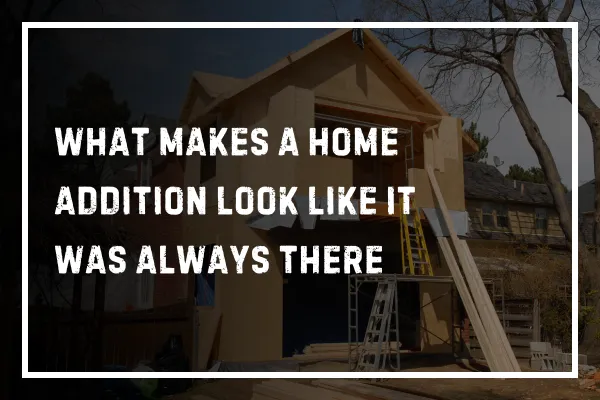
What Makes a Home Addition Look Like It Was Always There
A great home addition shouldn't look like an addition. It should look like somebody found the original blueprints and discovered a few rooms everyone forgot existed. That's harder than simply matching the siding and calling it a day.
The additions that feel original get dozens of small relationships right: rooflines, proportions, windows, foundation heights, trim, materials, and interior flow. When those details agree with the existing house, the new square footage disappears into the architecture. When they don't, the addition announces itself from the driveway.
1. Start With the Roofline
The roof is one of the biggest visual clues that something was added later. Pitch, eave depth, overhangs, fascia, ridges, and the way new roof sections intersect with the existing structure all influence whether an addition feels integrated.
That doesn't mean the new roof must perfectly duplicate the old one. It does mean the two need to speak the same architectural language. A roofline that respects the proportions and geometry of the original house can make thousands of new square feet feel surprisingly natural.
2. Get the Proportions Right
An addition can use exactly the same materials as the original house and still look wrong if its proportions are off. A massive new wing attached to a modest home can overwhelm the original structure, while an undersized addition can look like something was simply stuck onto the side.
Good additions pay attention to scale. Wall heights, roof mass, setbacks, openings, and the overall shape of the new space should relate to what's already there. The goal isn't necessarily symmetry. It's visual balance.
3. Make the Windows Belong
Windows are one of the easiest ways to spot a poorly integrated addition. Change the proportions, grid patterns, trim widths, head heights, or spacing dramatically enough and the new section can look like it belongs to an entirely different house.
Matching doesn't always mean buying an identical window, especially when the originals are decades old. What matters is maintaining the visual rhythm. Similar proportions, placement, trim details, and alignment can make new windows feel like part of the original design rather than obvious replacements.
4. Respect the Exterior Materials
Matching siding sounds easy until you put new material beside something that has spent 25 years exposed to weather. Colors fade, textures change, products get discontinued, and even supposedly identical materials can look noticeably different when installed decades apart.
Sometimes the smartest solution is not attempting an imperfect match. A deliberate material transition can look far better than two almost-matching surfaces sitting beside each other. The key is making the change look intentional and tying it into other elements of the home's exterior.
5. Watch the Foundation Height
One of the less glamorous details can also be one of the most revealing. If the addition's finished floor or foundation doesn't relate properly to the existing house, the difference can affect everything from exterior proportions to interior transitions.
Getting those elevations right early helps new and old spaces connect naturally. It can also reduce awkward steps, strange siding transitions, and obvious changes in floor height. Nobody notices a well-resolved foundation transition, which is exactly the point.
6. Carry the Trim and Details Through
Architecture lives in the details. Fascia widths, corner boards, window trim, soffits, door casings, baseboards, crown molding, and other seemingly minor elements create a visual vocabulary throughout a house.
When an addition suddenly introduces completely different trim proportions or detailing, people may not immediately know what's wrong, but they can usually feel it. Repeating important details from the original home helps the addition inherit some of its character.
7. Make the Interior Transition Disappear
The outside can be flawless and the addition can still feel obvious the moment you walk inside. Awkward openings, sudden ceiling-height changes, mismatched flooring, strange hallways, or rooms that can only be reached by passing through another room are classic giveaways.
Good additions extend the home's circulation rather than simply attaching square footage to it. Flooring, drywall texture, trim, lighting, ceiling lines, and sightlines all help connect old and new. Ideally, guests shouldn't be able to point to the exact spot where the original house ends.
8. Let the Original House Lead
The temptation with an addition is to make the new part the star. Bigger windows. Taller ceilings. Trendier finishes. More dramatic architecture. Sometimes that works, but it can also make the original home look like an accessory to its own addition.
The strongest additions usually take their cues from what's already working. They preserve the home's architectural identity while improving the things that prompted the addition in the first place. Good design doesn't erase the original house. It makes the house feel like this was the plan all along.
The Bottom Line
Making an addition feel original isn't about copying every existing detail. It's about understanding the relationships that give the house its identity and carrying enough of them into the new construction that everything feels connected.
Rooflines, windows, siding, foundations, trim, flooring, and interior flow may seem like separate decisions, but together they tell one story. When they're coordinated well, people notice the house. When they're not, they notice the addition.
