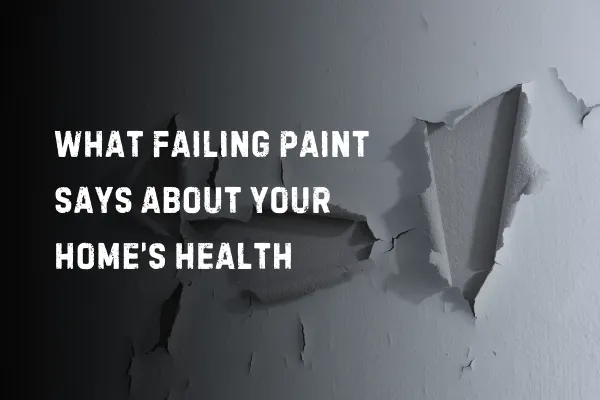
What Failing Paint Says About Your Home’s Health
When paint starts peeling, bubbling, or cracking, most homeowners think, “Time to repaint.” Wrong. Paint failure isn’t just cosmetic—it’s a message. It’s your home’s way of saying, “Something’s not right under here.” And ignoring it is like slapping a Band-Aid on a broken bone.
Let’s break down what’s really happening when your paint gives up the ghost.
1. Moisture Is the Silent Killer
If paint is blistering, you’re not dealing with bad paint—you’re dealing with water. Moisture seeps through siding, walls, or trim, pushing paint off like a loose scab. It could be leaky gutters, missing caulk, or poor ventilation. Don’t repaint until you find and fix the source. Otherwise, you’ll be back on a ladder in six months, wondering why your “premium paint job” didn’t last.
2. Wood Rot and Decay Hide Behind Pretty Colors
If your siding feels soft or your trim looks swollen, the problem isn’t paint—it’s rot. Paint protects wood, but once water gets in, rot spreads fast. When you see peeling at the bottom edges of siding or window sills, that’s your clue. Probe it with a screwdriver. If it sinks in easily, you’ve got bigger issues than color fading.
3. Structural Shifts and Settling Cracks
Sometimes paint fails because the surface underneath is moving. Cracks around door frames, ceilings, or foundations might look harmless, but they tell a story. Houses settle, sure—but movement that causes paint to split could mean your foundation, framing, or drywall needs attention. A good contractor doesn’t just patch; they diagnose.
4. Poor Prep = Fast Failure
Here’s a truth no one likes to admit: most paint jobs fail before the brush even touches the wall. Skip sanding, ignore washing, or paint over mildew, and you’re asking for disappointment. The best painters spend more time prepping than painting. They clean, scrape, prime, and seal so the finish sticks and stays.
5. Your Paint Might Be Telling You to Upgrade Materials
If your home’s older, it might have oil-based paint that’s now cracking under modern latex. Or you might be using exterior paint on surfaces that expand and contract too much. Sometimes the problem isn’t your technique—it’s your materials. The fix: match your paint type to your surface and environment.
Bottom line
When your paint starts to fail, it’s not just a surface issue—it’s a signal. Every bubble, crack, or peel is your home’s way of telling you something deeper is wrong. Water intrusion, rot, movement, or skipped prep work all leave clues if you know how to read them. The goal isn’t to repaint faster; it’s to investigate smarter.
Good maintenance isn’t about freshening up walls every few years. It’s about understanding how your home breathes, shifts, and reacts to the elements. Catching early signs saves you from bigger repairs later and keeps your home structurally sound—not just visually appealing. When paint starts talking, listen closely. It’s trying to save you from a bigger bill down the road.
