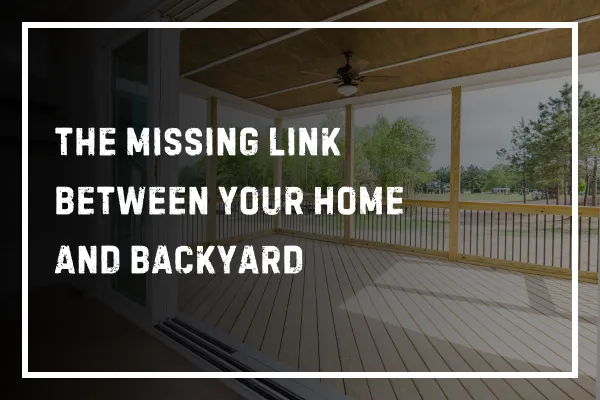
The Missing Link Between Your Home and Backyard
For years, indoor and outdoor spaces were treated as separate worlds. Inside was where life happened. Outside was for occasional grilling, gardening, or summer gatherings. Today, the most functional and desirable homes blur that line, creating seamless transitions that expand usable space without adding square footage.
The key is not decorating patios or buying expensive furniture. The key is thoughtful design and construction that remove barriers and make outdoor areas feel like natural extensions of the home.
1. Open Up the Transition
Doors and windows are more than barriers; they are opportunities. Large sliding doors, French doors, or multi-panel glass doors improve sightlines, let in natural light, and make movement between indoors and outdoors effortless. Homes with thoughtful transitions see more use of outdoor spaces because access is convenient and inviting.
Even small updates, like widening an existing doorway or improving the landing area, can dramatically improve flow. These changes encourage people to step outside more often, turning a backyard into a living space rather than a disconnected feature.
2. Build Outdoor Spaces That Feel Like Rooms
A deck or patio is only useful if it functions like an extension of the home. Thoughtful layouts for dining, lounging, and gathering create a sense of purpose, making outdoor areas feel intentional rather than afterthoughts. Purposeful design encourages people to use the space regularly, not just during summer weekends.
Covered patios, pergolas, or partial roof structures also add functionality. They provide protection from sun and rain, making outdoor living spaces practical for everyday life and extending their use across seasons.
3. Eliminate Awkward Elevation Changes
Steep steps, narrow landings, and uneven transitions make outdoor areas feel disconnected. Even a beautifully designed backyard can be underutilized if it’s hard to access. Addressing these challenges makes movement seamless and encourages frequent use.
Simple improvements like wider steps, landings, and better pathways guide people naturally between indoor and outdoor spaces. A smooth transition creates a sense of connection and makes outdoor areas feel like an integrated part of the home.
4. Use Materials and Finishes That Create Continuity
Visual consistency strengthens the connection between spaces. Matching trim, paint colors, or finishes between interior and exterior areas creates a cohesive look that draws the eye naturally from indoors to outdoors.
Consistency doesn’t mean copying everything exactly. It’s about reinforcing a visual relationship that makes the outdoor space feel intentional and aligned with the home’s design. Even minor changes can have a major impact on flow.
5. Create Shelter That Extends the Season
Outdoor spaces should be usable beyond the perfect weather days. Covered patios, pergolas, and roof extensions protect from sun and rain, making the backyard comfortable year-round.
In the Pacific Northwest, weather protection often determines whether a space is used regularly. Adding shelter transforms an underused patio into a functional outdoor living room, increasing enjoyment and value.
6. Think About Flow During Remodels
Interior renovations are a natural opportunity to improve outdoor connectivity. Kitchen remodels, family room expansions, and new floor plans often allow for better door placement or larger openings to decks and patios.
Considering outdoor access during remodels ensures that indoor improvements don’t create a disconnect. Planning ahead keeps outdoor spaces integrated and encourages natural flow between all areas of the home.
The Bottom Line
Creating flow between indoor and outdoor living is not about making a backyard look better. It is about making the entire property function better. When transitions are seamless, outdoor spaces become part of everyday life instead of places that only get used a few weekends each year.
The biggest improvements often come from practical upgrades such as better access, thoughtfully designed decks, covered gathering areas, and remodels that strengthen the connection between spaces. The goal is simple: make it easier and more enjoyable to use every square foot you already own.
