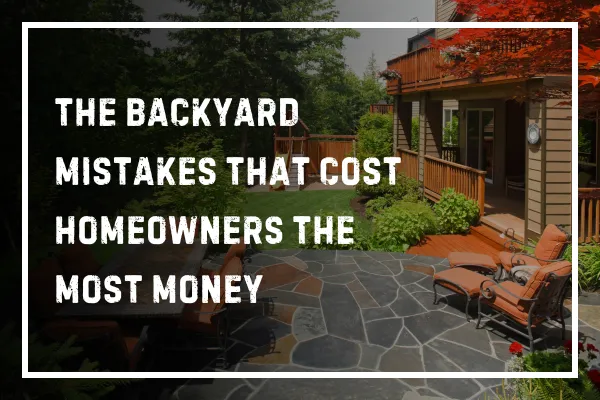
The Backyard Mistakes That Cost Homeowners the Most Money
Most homeowners assume the biggest expense in a backyard project is the construction itself. The deck, patio, pergola, or outdoor living area gets all the attention because it's the part people can see.
What often gets overlooked are the decisions made before construction starts and the habits that follow after it's complete. Those are usually the things that determine whether a project remains an asset for years or turns into a series of expensive repairs. The good news is that most costly backyard mistakes are predictable, which means they're also avoidable.
1. Ignoring Drainage
Drainage is one of the least exciting topics in construction, which is exactly why it gets overlooked so often. Most homeowners are focused on finishes, colors, materials, and features. Very few people ask where the water is going to go once the rainy season arrives.
The problem is that water never stops looking for the path of least resistance. Poor drainage can lead to erosion, settling patios, damaged landscaping, standing water, and even structural issues over time. A properly designed drainage plan rarely gets noticed, but it quietly protects every other investment in the backyard.
2. Choosing Materials Based on Price Alone
Everyone has a budget. There's nothing wrong with wanting to control costs. The mistake happens when homeowners compare materials using only the upfront price tag.
Outdoor structures have to survive years of weather, moisture, sunlight, and everyday use. Materials that cost less initially often require more maintenance, more repairs, and earlier replacement. What looked like a savings decision on day one can become a much larger expense several years later. The goal isn't to buy the most expensive option available. The goal is to choose materials that deliver the best long-term value.
3. Building for Today's Lifestyle
One of the easiest mistakes to make is designing a backyard around how life looks today. The challenge is that outdoor spaces often last much longer than the circumstances they were originally designed for.
Families grow, kids get older, entertaining habits change, and homeowners discover new ways they want to use their property. A patio that seemed large enough can suddenly feel crowded. A deck without lighting becomes limiting. A space without weather protection sees less use than expected. Thinking a few years ahead during the planning process can prevent expensive upgrades later.
4. Fighting the Property
Every property comes with its own set of opportunities and challenges. Some have slopes. Some have drainage concerns. Some receive intense afternoon sun. Others have views that deserve to be highlighted.
The most successful outdoor projects work with those conditions instead of trying to overcome them. When a design ignores the natural characteristics of a property, it often creates unnecessary complications and added costs. Good design recognizes what the property wants to do naturally and uses that to its advantage.
5. Ignoring Permits and Local Requirements
Many homeowners assume permits are simply paperwork that slows down a project. In reality, permits exist to ensure projects meet safety, structural, and zoning requirements. Skipping permits can lead to fines, project delays, difficulties during a home sale, and in some cases, the cost of removing or rebuilding completed work. What feels like a shortcut at the beginning can become one of the most expensive decisions in the entire project.
The permitting process should be part of the planning phase, not an afterthought. Understanding local requirements before construction begins helps avoid surprises and ensures the investment is protected for years to come.
6. Treating Maintenance as an Afterthought
The completion of a project isn't the end of its lifecycle. In many ways, it's the beginning.
Outdoor structures require maintenance. Paint and stain eventually need attention. Small repairs occasionally need to be made. Drainage systems need to remain functional. Homeowners who stay ahead of maintenance usually spend less money over the life of the structure than those who wait until visible damage appears. Small issues are typically affordable. Large repairs rarely are.
The Bottom Line
The most expensive backyard mistakes are rarely dramatic. They usually start as small decisions that seem insignificant in the moment.
Proper drainage, thoughtful planning, quality materials, future-focused design, and routine maintenance aren't the most exciting parts of a project. They are, however, the things that determine whether a backyard remains functional, attractive, and valuable for years to come. The homeowners who get the most from their outdoor spaces are often the ones who focus on avoiding costly mistakes before they happen.
