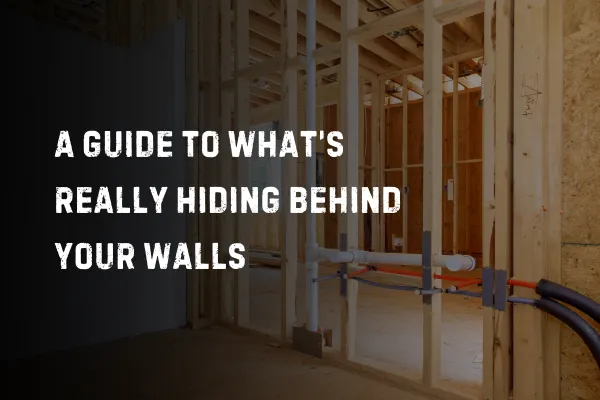
A Guide to What’s Really Hiding Behind Your Walls
Most of us think of walls as just barriers that divide space and hold up pictures. But behind that layer of drywall lives an entire ecosystem that can make or break the health, safety, and efficiency of your home.
When you open a wall, you’re not just seeing studs and insulation. You’re seeing the history of your house. You’re seeing every decision, shortcut, or stroke of craftsmanship made over the years. And sometimes, what you find back there can surprise you.
Let’s pull back the drywall and take a look at what’s really hiding behind those walls.
1. The Backbone: Studs and Framing
Your studs are the bones of your home. They determine whether a wall is load-bearing, how level your drywall hangs, and whether your shelves stay up. The problem? Older homes often have a mix of materials like rough-cut lumber, plaster, and patchwork framing from past remodels. If you’re opening walls, take a moment to inspect for any moisture damage or shifting. A cracked or bowed stud is a silent threat to your structure’s integrity.
2. Electrical: The Lifelines
Behind the paint lies a maze of wiring that powers everything you take for granted, from lights to outlets to your favorite gadgets. Older homes can hide knob-and-tube wiring or DIY splices that belong in a museum. Faulty wiring is one of the most common causes of house fires. If you see cracked insulation, burnt marks, or outdated aluminum wire, stop and call an electrician. This is not the time for YouTube tutorials.
3. Plumbing: The Veins
Water always wins. Pipes behind the walls tell a story of quick fixes, corrosion, or sometimes, miracles. Galvanized pipes can clog with rust and reduce water flow. PVC can crack from age or cold. If you’ve ever had low pressure or mysterious leaks, odds are the answer lives behind your wall. Inspect for any moisture, discoloration, or mold. And if you find flexible gray polybutylene pipes, replace them immediately.
4. Insulation: The Silent Hero (or Villain)
Insulation can make or break your comfort and your energy bill. Over time, it can sag, settle, or trap moisture. In older homes, you might find asbestos-based insulation or even old newspaper stuffing (yes, really). Replacing it with modern spray foam or mineral wool can dramatically improve your comfort and reduce your heating costs.
5. Surprises: The Uninvited Guests
Sometimes what’s hiding behind walls is alive, or was. Rodents, bees, and ants all love cozy, dark spaces. Even worse? Black mold or termite damage. If your walls smell musty or you notice bubbling paint, that’s your house trying to tell you something.
The truth is, walls are storytellers. Every wire, pipe, and stud speaks to the home’s past. If you’re remodeling, renovating, or even just repainting, take the opportunity to look deeper. Because what’s hidden behind your walls might not just change your next project, it might save you from a future one.
